 By Lal Singh
 Owning a bike or car in India comes with many responsibilities. You renew your PUC certificate, follow traffic rules, wear a helmet, fasten your seatbelt, and pay road tax. Yet there is one simple legal requirement that millions of Indian vehicle owners quietly ignore every year — third-party insurance.
Most people think of it as optional or a formality. The truth is far more serious. Driving without third-party insurance in India is not just a fine-able offence. In specific cases, it can lead to imprisonment, criminal records, and lifelong financial liability. Understanding why this small document matters can save you from consequences that no amount of money can undo later.
What Third-Party Insurance Actually Covers
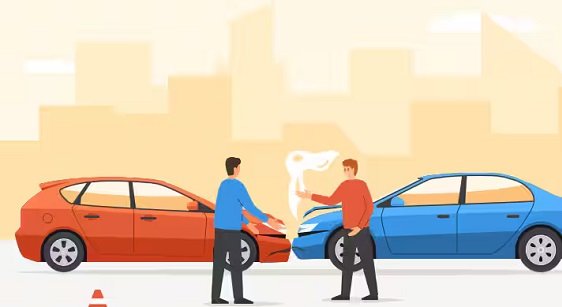
Third-party insurance is the most basic and most mandatory form of vehicle insurance in India. It covers damage, injury, or death caused by your vehicle to:
- Another person on the road
- Another vehicle
- Public or private property
- Pedestrians, cyclists, and passengers in other vehicles
It does not cover damage to your own vehicle. That falls under comprehensive insurance, which is optional.
The logic is simple. If you cause harm to someone else, the law expects you to have financial backing to compensate them. Third-party insurance ensures that backing exists.
The Legal Requirement Under the Motor Vehicles Act
Under Section 146 of the Motor Vehicles Act, 1988, every vehicle plying on a public road in India must have a valid third-party insurance policy at all times. There are no exceptions for occasional use, festival driving, or short trips.
The law treats this as a non-negotiable safety net for the public. The government’s reasoning is straightforward — if uninsured drivers cause accidents, victims may never receive compensation, leaving families financially destroyed for no fault of their own.
The Penalties You Face Without Third-Party Insurance
The consequences scale based on the situation.
1. First-Time Offence
A fine of ₹2,000 and/or imprisonment of up to 3 months.
2. Repeat Offence
A fine of ₹4,000 and/or imprisonment of up to 3 months.
These are not theoretical numbers. Traffic police across major Indian cities have been actively prosecuting offenders under these sections. With the introduction of e-challans and digital verification, hiding has become nearly impossible.
When Jail Time Becomes a Real Risk
The fine alone is not the most worrying part. The real legal risk appears in three specific situations.
1. Causing an Accident Without Insurance
If you injure or kill someone in a road accident while driving uninsured, you face:
- Criminal charges under the Motor Vehicles Act
- Charges under the Indian Penal Code (or BNS) for negligence
- Imprisonment ranging from 6 months to 2 years
- Permanent disqualification of your driving licence
- Lifetime financial liability for victim compensation
2. Repeat Violations After a Warning
If you have been previously fined for driving without insurance and continue to do so, the courts treat it as wilful disregard for public safety. Judges become significantly stricter on imprisonment.
3. Damage to Public Property or Multiple Victims
Accidents that injure several people, damage government property, or cause fatalities trigger automatic criminal proceedings. Without insurance backing, you have no financial protection in court.
The Hidden Financial Disaster
The legal risk is one side of the story. The financial consequences are often even worse.
Unlimited Liability
Indian courts have ruled in multiple cases that third-party liability is unlimited for death or grievous injury. Compensation amounts can run into ₹20 lakh, ₹50 lakh, or even ₹1 crore depending on the victim’s age, profession, and dependents.
A single accident can wipe out a family’s savings, force the sale of property, and leave the offender in debt for life.
MACT Cases
The Motor Accident Claims Tribunal (MACT) hears compensation cases. Without insurance, the entire compensation falls on the vehicle owner personally. Salaries can be attached, bank accounts frozen, and property auctioned to meet the claim.
No Legal Defence Backing
Insured drivers get the support of the insurance company’s legal team. Uninsured drivers must fight the case alone, paying lawyer fees, court fees, and settlements entirely from personal resources.
Why So Many Indians Drive Without It
Despite the law being clear since 1988, an estimated 50% to 60% of vehicles on Indian roads either have expired or no third-party insurance. The reasons are familiar:
- “It’s just a formality, nothing will happen.”
- Forgetting to renew after the first year.
- Buying second-hand vehicles without updating insurance.
- Confusing the registration certificate with insurance.
- Treating insurance as an unnecessary expense.
The annual premium for third-party insurance is among the lowest in the world. For a bike, it is around ₹500 to ₹800 per year. For a small car, it is typically ₹2,000 to ₹3,500 per year. A fraction of one EMI on the vehicle itself.
How to Check If Your Insurance Is Valid
Many vehicle owners discover at the worst moment that their insurance lapsed quietly months ago. Avoid this by checking proactively.
Methods to Verify
- Use the IIB Portal at https://www.iib.gov.in to check your vehicle’s insurance status
- Check the Parivahan portal at https://parivahan.gov.in
- Scan the QR code on your insurance certificate
- Call your insurance company’s customer care
- Use the mParivahan mobile app
Verify at least twice a year, ideally before any long-distance travel.
How to Buy or Renew Third-Party Insurance
The process today is fast and entirely online.
Where to Buy
- Direct from insurance company websites (HDFC ERGO, ICICI Lombard, Bajaj Allianz, Tata AIG, and others)
- Through online platforms like PolicyBazaar, Coverfox, and InsuranceDekho
- Via your bank’s insurance partner
- From local insurance agents
Documents Required
- Vehicle registration certificate (RC)
- Previous insurance policy (if any)
- Driving licence
- Owner’s identity proof
A bike policy can be purchased in under 10 minutes online. A car policy takes slightly longer if inspection is needed for an expired policy.
Special Situations to Be Aware Of
1. New Vehicle Purchase
The dealer usually provides a mandatory 5-year third-party insurance for two-wheelers and 3-year third-party insurance for cars at the time of purchase. After that, renewal is your responsibility.
2. Selling a Vehicle
When you sell your vehicle, transfer the insurance to the new owner within 14 days of sale. Otherwise, you remain legally and financially responsible for any accident caused by the buyer.
3. Long Storage or Idle Vehicle
Even if the vehicle is parked unused, insurance is technically required if it is registered. To avoid this, formally apply for non-use declaration with the RTO.
4. Driving Borrowed Vehicles
Driving a friend’s or relative’s car? Their insurance covers the vehicle, but you must hold a valid driving licence. If they have no insurance, you bear equal legal responsibility.
Common Misconceptions to Drop
- “Comprehensive insurance is the same as third-party.” It is not. Comprehensive includes third-party plus your own damage.
- “Old vehicles don’t need insurance.” Every active registered vehicle needs it.
- “Police will only issue a small fine.” They can also impound the vehicle and start criminal proceedings.
- “Insurance only matters in cities.” Rural courts apply the same Motor Vehicles Act.
- “Accidents can be settled privately.” Not when serious injury or death is involved.
Final Thoughts
Third-party insurance is not a paperwork formality. It is the legal and moral foundation of responsible vehicle ownership in India. A few hundred rupees a year for a bike or a couple of thousand for a car protects you from criminal charges, jail time, unlimited financial liability, and the lifelong burden of knowing you harmed someone without the means to compensate them.
If you are reading this and your insurance has expired — even by a single day — pause everything and renew it today. The online process takes minutes. The peace of mind lasts a full year. The legal protection lasts a lifetime.
Driving is a privilege backed by responsibility. Insurance is what turns that responsibility from a burden into security, for you and for everyone who shares the road with you.
FAQs
Q. Is third-party insurance mandatory for old vehicles too?
Yes. Every registered vehicle on Indian roads, regardless of age, requires valid third-party insurance.
Q. Can I be jailed only for not having insurance?
Yes, up to 3 months on first offence, and longer if accidents occur while uninsured.
Q. Does third-party cover damage to my own vehicle?
No. For that, you need comprehensive insurance.
Q. Is there a grace period after expiry?
No legal grace period. Driving even one day after expiry is an offence.
Q. Can I renew third-party insurance without inspection?
Yes, if renewed before expiry. After expiry, a vehicle inspection may be required.
Q. What happens if my insurance expires while my vehicle is parked?
You are not penalised if the vehicle does not move. But the moment it is driven, you commit an offence.
Q. Will my licence be cancelled for driving uninsured?
It can be suspended or cancelled, especially in case of repeat violations or accidents.