 By Lal Singh
 No, you cannot legally run a P2P lending platform in India without RBI registration as an NBFC-P2P. Peer-to-peer lending itself is allowed in India, but the platform that connects lenders and borrowers must be registered with the Reserve Bank of India. Without that registration, running a loan-matching app, website, WhatsApp group, or digital platform for public lending can become a serious regulatory problem.
P2P lending sounds simple: one person has extra money, another person needs a loan, and a platform connects both. But once this is done as an organised business, especially online, it enters RBI-regulated territory.
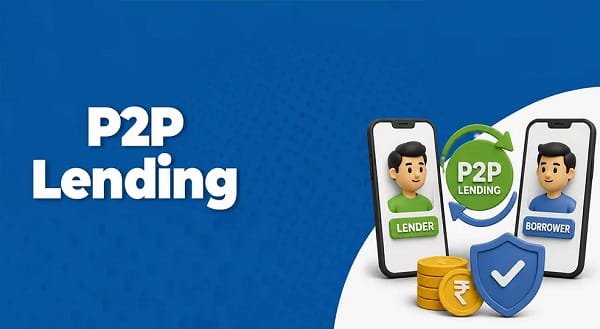
What Is P2P Lending?
P2P lending means borrowers and lenders are connected through a platform, usually digital. The platform does not work like a normal bank. It acts as an intermediary between people who want to lend and people who want to borrow.
RBI defines a “Peer to Peer Lending Platform” as an intermediary providing loan facilitation services through an online medium or otherwise. It also defines NBFC-P2P as a non-banking institution carrying on the business of a P2P lending platform.
So, even if the platform is not a full mobile app and works through a website, private portal, social media group, or some other arrangement, it may still fall under the P2P framework if it is facilitating loans between participants.
Is RBI Registration Compulsory?
Yes. RBI’s Master Directions clearly say that no NBFC-P2P can start or carry on the business of a peer-to-peer lending platform without obtaining a Certificate of Registration from RBI. They also say that only a company can undertake the business of a P2P lending platform.
This means an individual, proprietorship, partnership firm, informal group, or unregistered fintech cannot legally run a P2P lending platform. The business must be structured as a company and must obtain RBI approval.
RBI also requires a company seeking NBFC-P2P registration to have net owned funds of at least ₹2 crore or a higher amount if RBI specifies it.
Is a Normal NBFC Licence Enough?
Not exactly. P2P lending is a special category. RBI has created a separate regulatory structure called NBFC-P2P. A normal NBFC and an NBFC-P2P are not the same.
RBI’s FAQ says an existing NBFC cannot operate as an NBFC-P2P. It also says that platforms helping only banks, NBFCs and regulated financial institutions find borrowers are not treated as P2P platforms. But if retail lenders also use the platform for lending, separate NBFC-P2P registration is required.
This is a very important difference. A loan sourcing platform for banks/NBFCs is one thing. A platform where ordinary people lend money to other ordinary people is different.
Can You Lend Your Own Money Without RBI Licence?
A private person lending personal money to a friend, relative, employee, neighbour, or known business contact is not the same as running a P2P lending platform. But if lending becomes regular, public, high-volume, interest-based and business-like, state money-lending laws, tax rules, recovery rules and other laws may apply.
So, the simple distinction is this: private one-to-one lending is different; running a public loan-matching platform needs RBI registration.
What Can an NBFC-P2P Platform Do?
An NBFC-P2P is allowed to act as an intermediary and provide an online marketplace for lenders and borrowers. It can do due diligence, credit assessment, risk profiling, loan documentation, assistance in disbursement and repayment, and recovery support.
But it has strict limits. It cannot raise deposits. It cannot lend on its own. It cannot provide credit guarantee or credit enhancement. It cannot assume credit risk. If the borrower defaults, the lender bears the loss.
This means P2P platforms cannot behave like banks, deposit companies, chit funds, or guaranteed-return investment schemes.
Funds Must Move Through Escrow
RBI also requires P2P platform transactions to move through escrow accounts operated by a bank-promoted trustee. There should be separate escrow accounts for lender funds and borrower repayments. Lender funds should go only to the lender escrow account and then to the specific borrower’s bank account after compliance checks.
This rule is important because it prevents platforms from freely holding, mixing, rotating, or misusing customer funds.
Guaranteed Returns Are Not Allowed
Many P2P platforms earlier marketed lending like an investment product: “earn fixed returns,” “monthly income,” “assured return,” or “safe alternative to FD.” RBI has tightened this area strongly.
The platform must get a declaration from lenders that they understand the risks and that the P2P platform does not assure return of principal or interest. RBI also says P2P platforms must not promote P2P lending as an investment product with features like tenure-linked assured minimum returns or liquidity options.
This means a P2P business cannot legally promise safety like a bank FD.
Final Answer
P2P lending is legal in India only through an RBI-registered NBFC-P2P platform. Without RBI registration, you cannot legally run a public platform, app, website, or organised system that connects lenders and borrowers for loans.
A person may privately lend personal money in limited cases, subject to other laws. But building a P2P lending business without RBI approval is not legally safe.